




Use AI to summarise this article
Table of Contents
- Introduction
- What is Augmented Reality (AR) in eCommerce?
- Why AR is a Must-Have for Modern Online Stores
- Technical Advantages of AR for eCommerce Platforms
- Trending AR Applications in Online Retail
- How to Implement AR: Step-by-Step for Retailers
- FAQs
- Conclusion & Call to Action
Introduction
In 2026, online shoppers expect more than images and videos they want interactive, immersive experiences. One of the most transformative technologies for eCommerce is Augmented Reality to visualize purchases in eCommerce, which allows customers to see products in their own space, try virtual versions, and make confident buying decisions. Combined with visual search optimization, AR helps shoppers quickly find the exact products they want while providing an interactive preview, making the entire shopping journey faster and more intuitive.
For businesses in Coimbatore looking to stay competitive, integrating AR into your online store is no longer optional it’s essential. Cloudi5, a premier ecommerce website development company in Coimbatore, specializes in delivering cutting-edge AR solutions for online retailers.
What is Augmented Reality (AR) in eCommerce?
Augmented Reality (AR) is a technology that overlays digital content, such as 3D models, animations, or product information, onto the real-world environment using smartphones, tablets, or AR glasses. Unlike static images or videos, AR allows interactive visualization of products in real-time.
How it works technically:
- 3D Modeling: Products are scanned or digitally modeled in 3D for realistic visualization.
- AR SDKs and APIs: Technologies like Apple ARKit, Google ARCore, or WebAR frameworks power real-time placement and interaction.
- Spatial Mapping: AR maps surfaces in the customer’s environment for accurate scaling and positioning.
- Web Integration: Modern WebAR allows AR features to run directly in browsers, reducing dependency on apps.
For online stores, AR means that customers can:
- Place furniture or décor in their living room.
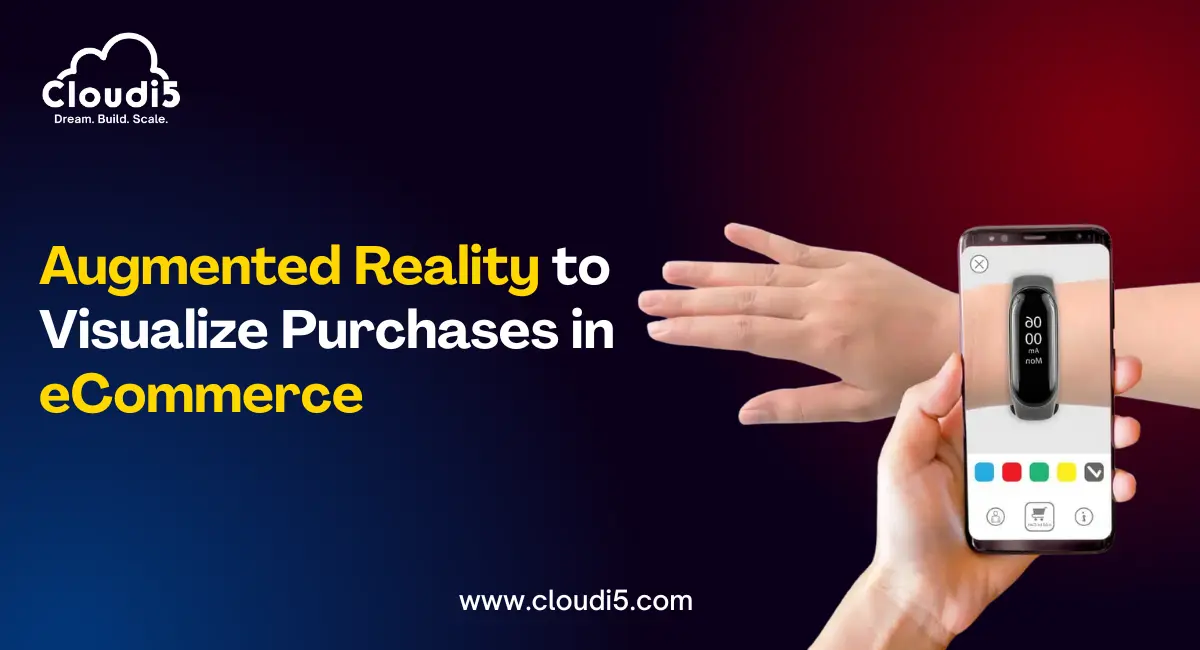
- Try fashion items like sunglasses or watches virtually.
- Test beauty products in real-time using the device camera.
Why AR is a Must-Have for Modern Online Stores
AR isn’t just a trend; it’s a conversion-boosting tool. Retailers adopting AR enjoy measurable business impact:
- Reduce Returns by up to 40% – Visualizing products ensures proper fit, size, and style.
- Increase Engagement Metrics – Users spend more time interacting with products, boosting conversion probability.
- Personalized Experiences – AR allows dynamic customization of colors, textures, or finishes.
- Future-Proofing Your Store – Early adopters are positioned as tech-forward and customer-centric.
Trendy Insight: In 2026, 3D product visualization, AR try-ons, and WebAR are the top features driving user retention and social sharing, especially for fashion, home décor, and beauty segments.
Technical Advantages of AR for eCommerce Platforms
Advantage | Technical Insight |
Real-Time Product Visualization | AR engines render 3D models dynamically in the user’s environment using ARKit or ARCore. |
Reduced Cognitive Load | Shoppers visualize items in context, reducing guesswork and decision fatigue. |
Seamless Mobile Integration | WebAR enables AR experiences directly in the browser without app downloads. |
Analytics & Data Insights | AR engagement metrics like interaction time and views can inform merchandising decisions. |
Scalable & Cross-Platform | AR works across iOS, Android, and Web platforms with responsive 3D models. |
Trending AR Applications in Online Retail
AR adoption is highest in industries where visual context matters most. Here are the current trends:
Industry | Trendy AR Application |
Home & Furniture | Customers visualize furniture in real rooms and share snapshots on social media for feedback. |
Fashion & Accessories | Virtual try-ons with advanced body mapping increase online clothing and accessories sales. |
Beauty & Cosmetics | AR-powered shade-matching tools enhance customer confidence before purchase. |
Automotive & Tools | Visual compatibility checks for parts or tools reduce errors and returns. |
Experiential Marketing | Brands offer AR campaigns in emails, social media, and QR codes to engage audiences. |
Technical Trend: WebAR is increasingly popular because it eliminates app installation barriers and supports shareable AR experiences.
How to Implement AR: Step-by-Step for Retailers
- Define Business Goals: Determine whether AR is being used to reduce returns, increase engagement, or drive conversions.
- Select Product Categories: Prioritize items with high visual complexity or fit uncertainty (furniture, décor, fashion).
- Choose AR Technology Stack: Options include ARKit, ARCore, Vuforia, or WebAR platforms for browser-based AR.
- Create High-Fidelity 3D Models: Invest in photorealistic and accurate product modeling for realistic visualization.
- Integrate Seamlessly: Embed AR buttons like “View in Your Space” on product pages or in apps.
- Test and Optimize: Ensure smooth AR interactions across devices, lighting conditions, and web browsers.
- Track Analytics: Monitor AR interactions, time spent, and click-through rates to measure ROI.
Partnering with Cloudi5, a best ecommerce website development company in Coimbatore, ensures end-to-end AR implementation from strategy to execution and optimization.
FAQs
- Do customers need AR glasses to experience AR in eCommerce?
No, most AR experiences run directly on smartphones or tablets.
- Which products benefit the most from AR visualization?
Furniture, home décor, fashion accessories, and beauty products see the highest engagement. - Can AR increase sales and conversions?
Yes, AR improves interaction, reduces hesitation, and boosts purchase confidence. - Is AR integration expensive for online stores?
Costs vary, but the ROI is high due to reduced returns and increased conversions. - Can AR be implemented on Shopify, WooCommerce, or custom stores?
Yes, AR can be integrated across major platforms via apps, SDKs, or custom solutions.
Conclusion
Augmented Reality to visualize purchases in eCommerce is no longer optional it is a key differentiator for online stores in 2026. By enabling customers to see, try, and interact with products virtually, AR reduces purchase hesitation, improves satisfaction, and drives business growth.
For businesses in Coimbatore looking to implement cutting-edge AR solutions, Cloudi5, a premier ecommerce website development company in Coimbatore, offers end-to-end services from 3D modeling and AR integration to analytics and optimization.
Contact Cloudi5 today to elevate your eCommerce store with immersive AR experiences and stay ahead of the competition!